Lip Enhancement
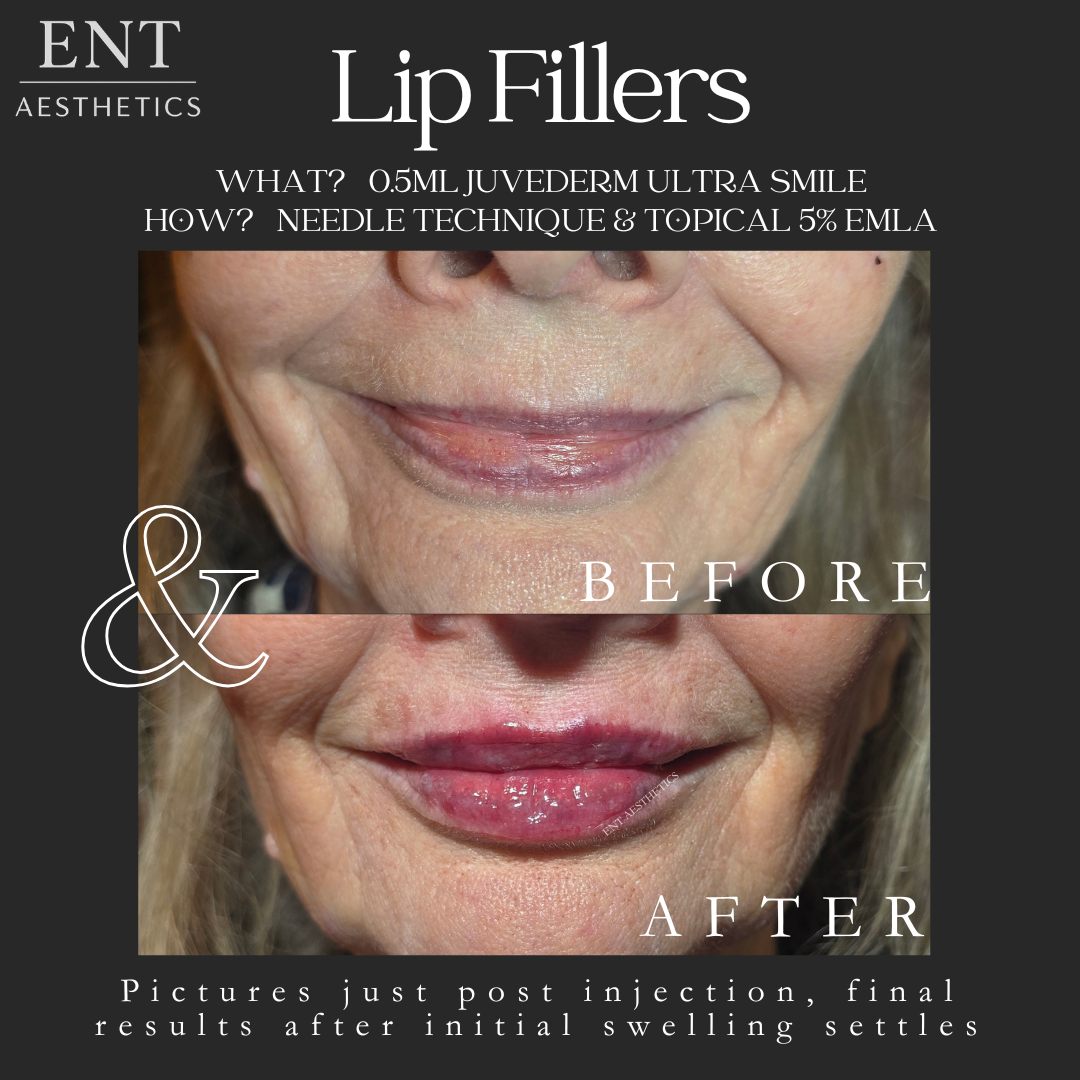
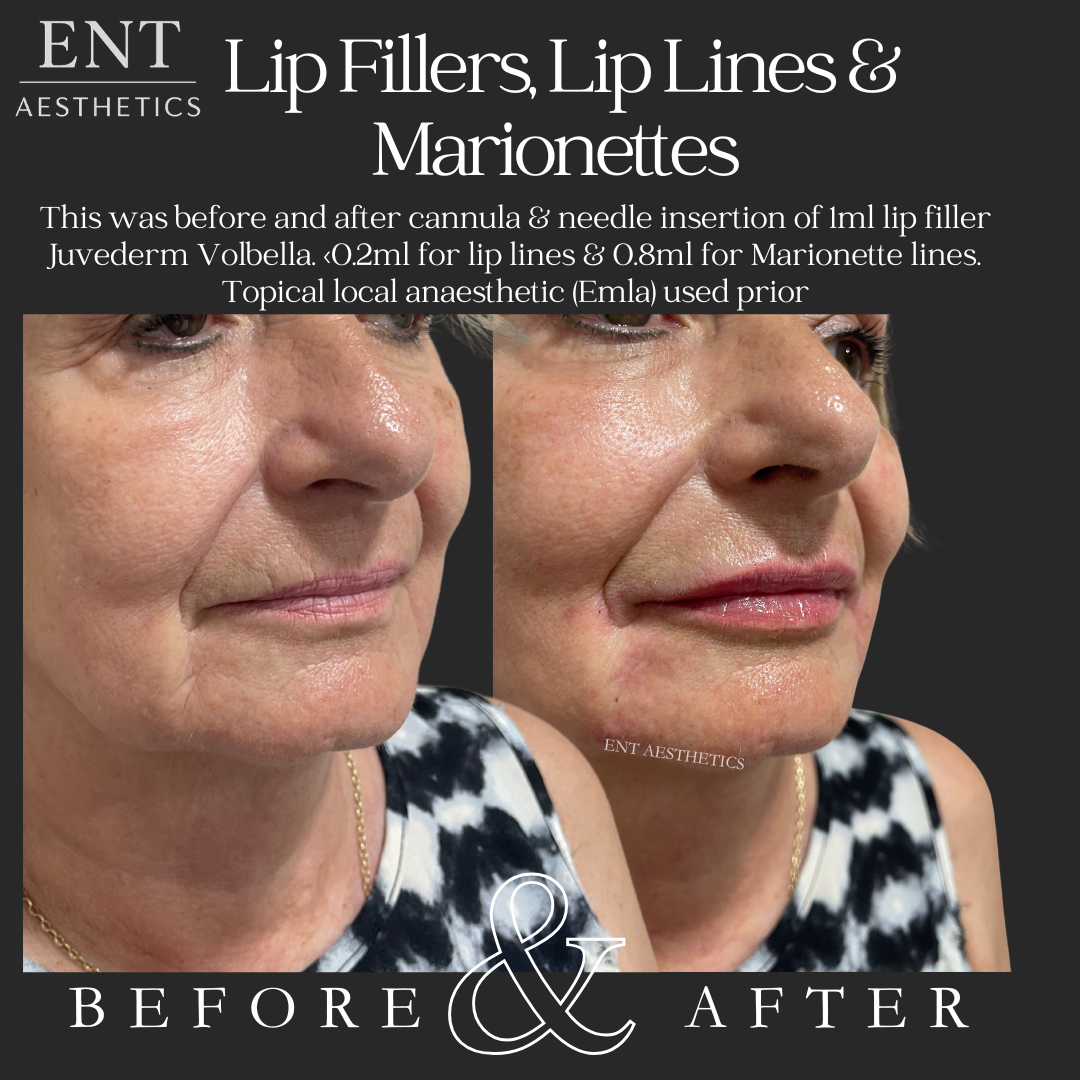
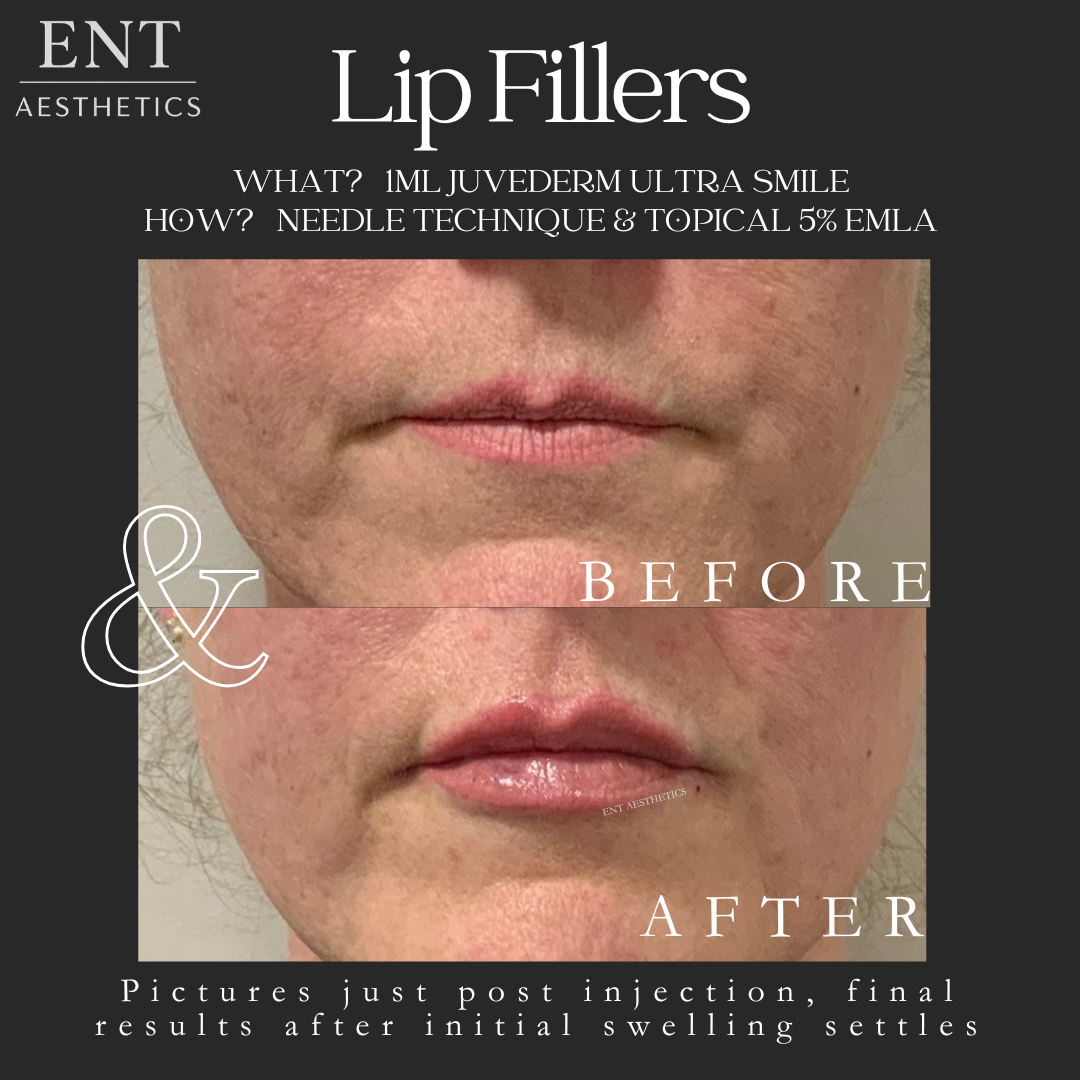
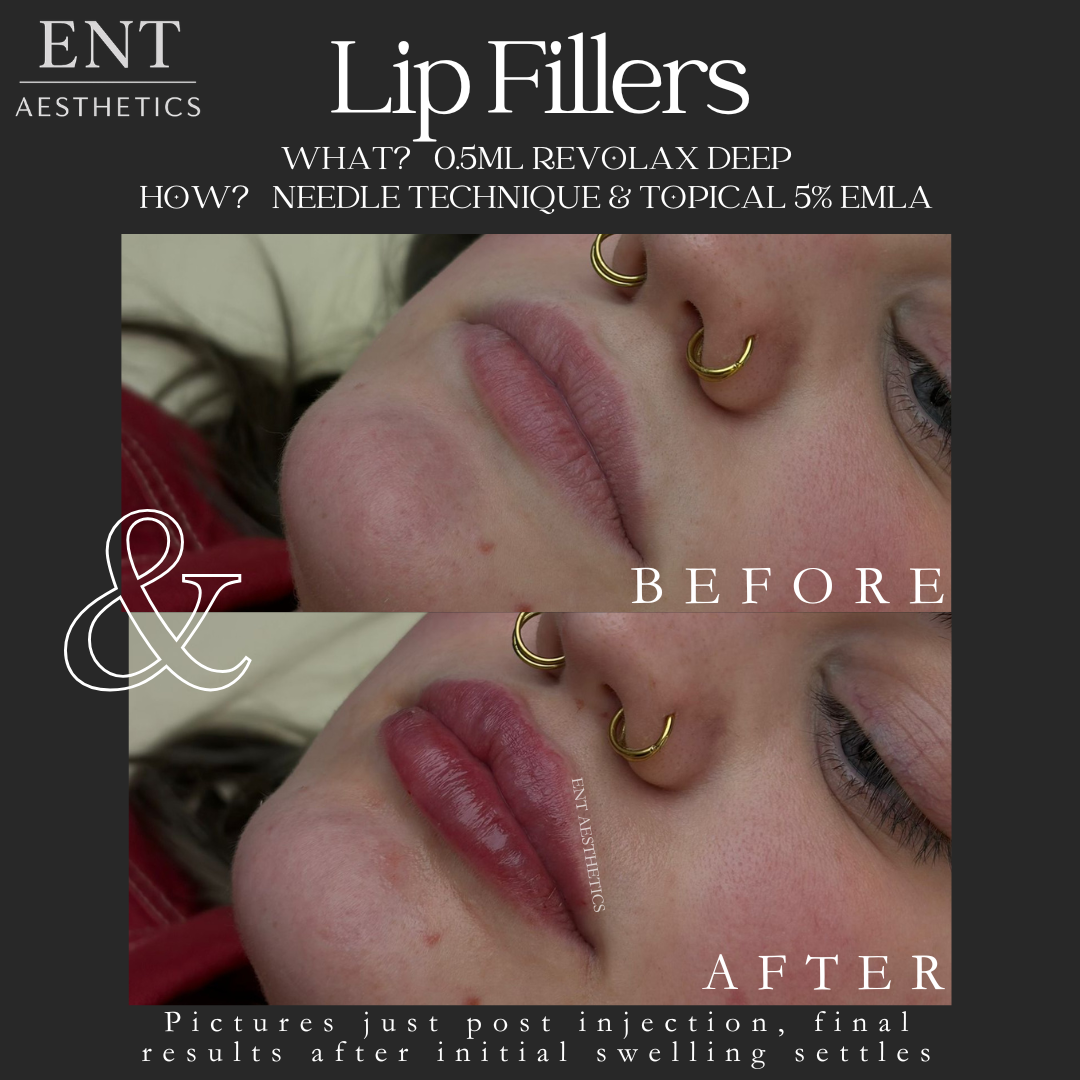
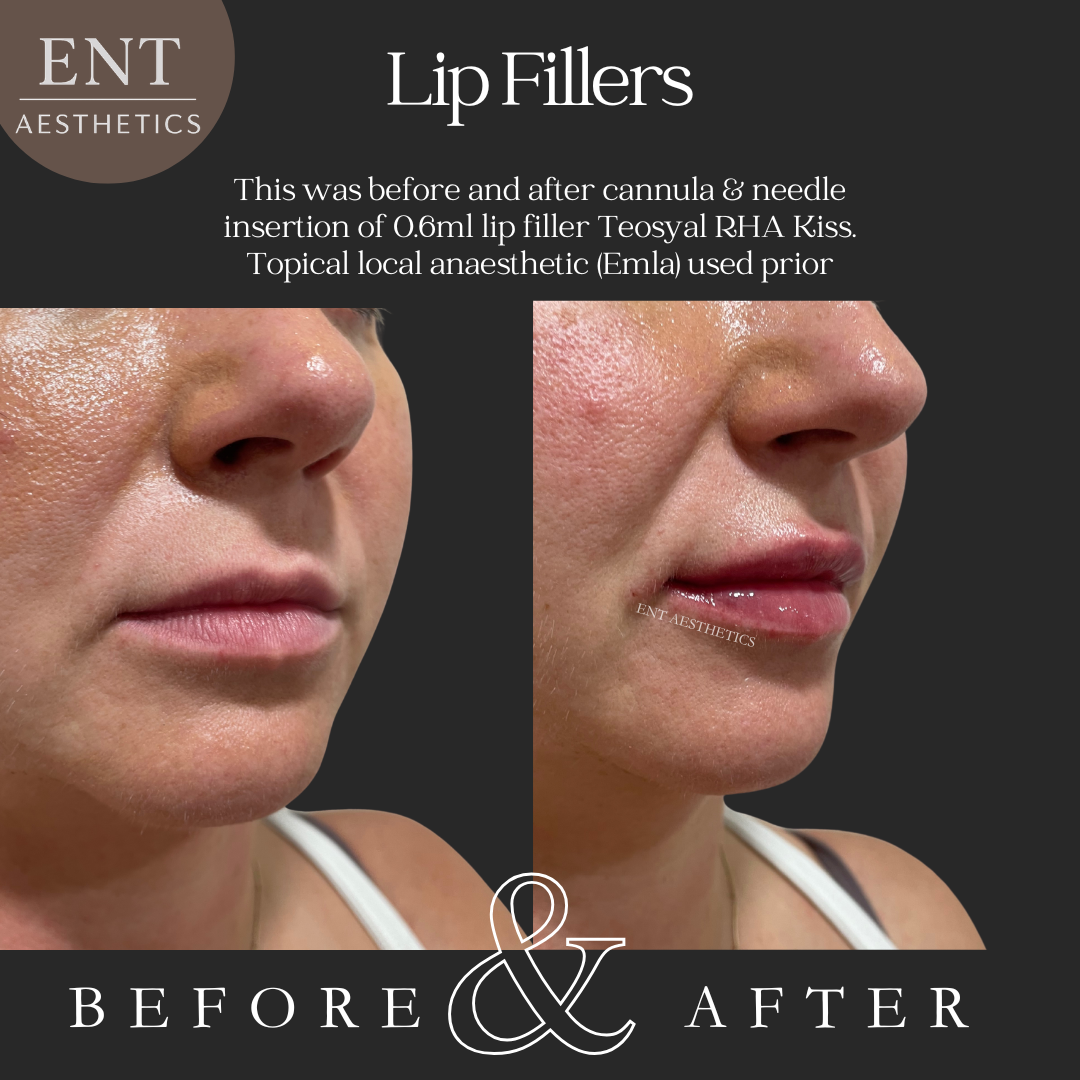
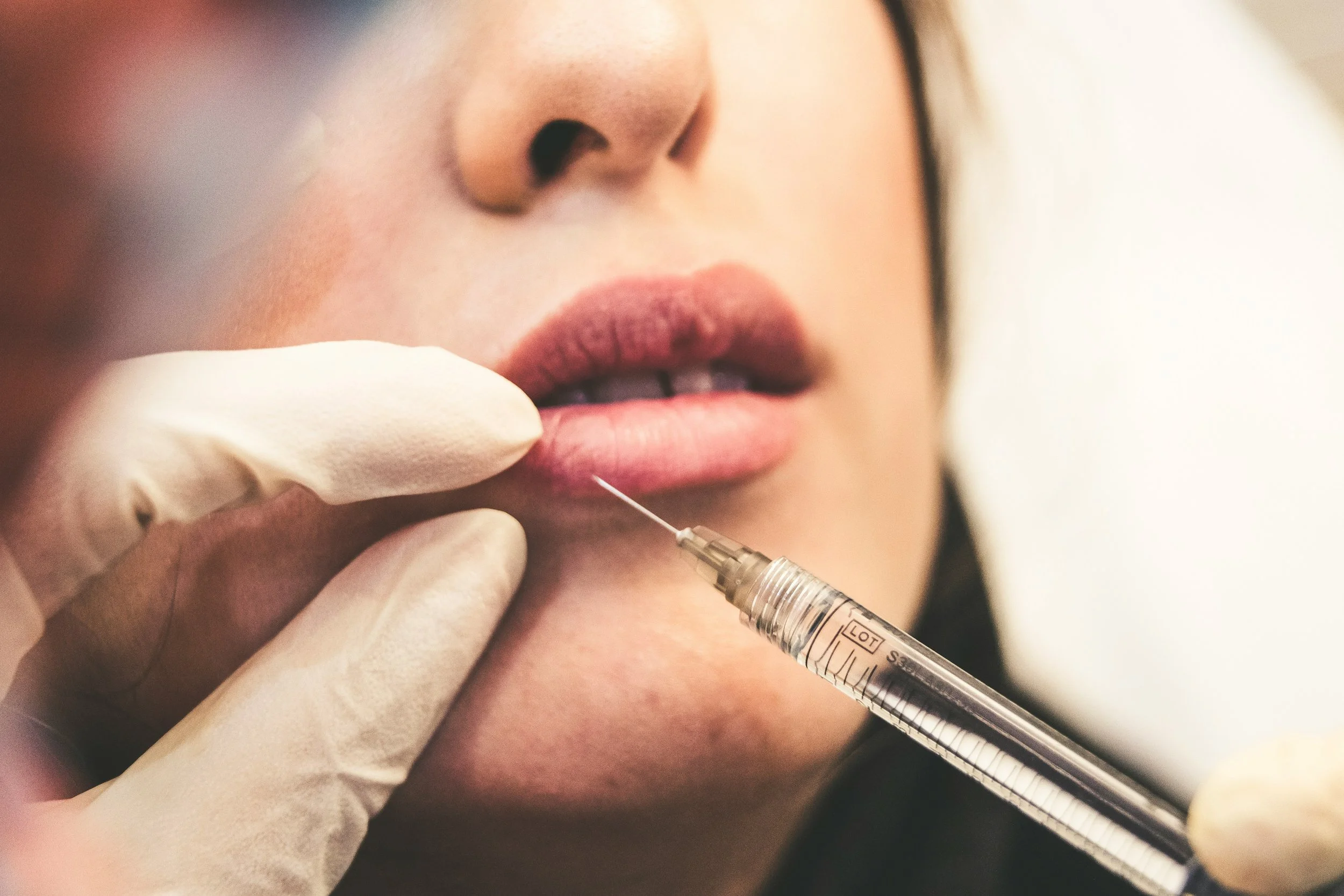
Lip fillers are a non-surgical cosmetic treatment used to enhance the shape, volume, and symmetry of the lips. They are most commonly made from hyaluronic acid, a substance naturally found in the body, which helps attract moisture and create a soft, natural-looking result. Lip fillers can be used to subtly define the lip borders, restore volume lost with age, improve balance between the upper and lower lips, or simply enhance overall lip appearance. At ENT Aesthetics, we use Juvederm fillers, a premium FDA approved filler brand, which contain additional Lidocaine, to help numb the lips whilst injecting for added comfort alongside numbing cream applied prior.
Procedure Time
30-60 minutes
Duration of Results
6-18 months
Downtime
Minimal. Expect initial swelling and tenderness which subsides in 48-72h
FAQs
-
Lip fillers are generally well tolerated. However, most patients will feel stinging, some discomfort and pressure during the treatment.
A numbing cream will be applied beforehand, and the lip fillers used at ENT Aesthetics contain a local anaesthetic to improve comfort.
-
After lip filler treatment, it’s normal to experience swelling, tenderness, redness, and possible bruising, especially in the first 24–48 hours. The lips may feel firm or uneven initially, but this usually settles as the filler integrates. Swelling typically peaks within the first 1–2 days and gradually improves over a few days, with most patients feeling back to normal within a week. Bruising, if it occurs, can last up to 7–10 days.
Final results are usually visible once swelling has fully resolved. Following aftercare advice helps ensure optimal healing and results.
-
Feeling small lumps or uneven areas after lip filler is common, especially in the first few days. This is usually due to swelling or the filler settling and often resolves on its own.
What to do:
Give it time — most lumps soften and smooth out within 1–2 weeks
Avoid excessive touching or massaging unless your practitioner has advised you to do so
Follow your aftercare instructions carefully
When to contact your practitioner:
If lumps are persistent after 2 weeks
If they are painful, hard, worsening, or affecting lip movement
If you notice increasing redness, heat, severe pain, colour changes, or blistering — seek urgent advice, as these are not normal
In many cases, lumps can be easily adjusted by your injector once swelling has settled. If needed, hyaluronic acid fillers can also be safely dissolved. When in doubt, it’s always best to check in with your practitioner for reassurance.
-
Lip filler and a lip flip using Botox are different treatments with different goals, though both can enhance the appearance of the lips.
Lip filler uses hyaluronic acid to add volume, shape, and structure to the lips. It can make the lips fuller, improve symmetry, define the lip borders, and address volume loss. Results are visible immediately (once swelling settles) and typically last several months.
A lip flip uses a small amount of Botox injected into the muscles around the upper lip. This relaxes the muscle so the lip gently rolls outward, making it appear slightly more prominent without adding volume. It’s best for patients who want subtle enhancement or whose upper lip curls inward when smiling. Results are temporary and usually last 2–3 months.
In short, fillers add volume, while a lip flip enhances lip position and shape. Some patients choose to combine both for a balanced, natural result.
-
Yes — while lip fillers are generally safe when performed by a qualified medical professional, there are potential risks to be aware of.
Common and temporary side effects include swelling, bruising, redness, tenderness, and mild asymmetry, which usually settle within days.
Less common risks include lumps, prolonged swelling, migration of filler, or infection.
Rare but serious complications can occur, such as vascular occlusion, which may affect blood supply to the skin and requires urgent treatment. Hyaluronic acid lip fillers are reversible, which adds an important safety advantage. A thorough consultation and proper technique help minimise these risks.